Your business requires routine sanitation based upon risk factors, operational volume, allergen concerns, and regulatory checks, combined with documented records demonstrating HACCP compliance, inspection results, and government health requirements. The information below detail essential sanitation program components.
Essential Summary
- Sanitation professionals from Brampton assist restaurants, grocery departments, commissaries, warehouses, bakeries, schools, mobile vendors, and allergen-sensitive operations.
- They disinfect frequently contacted areas, food-contact equipment, kitchens, floors, drains, restrooms, and storage areas using compartmentalized approaches to prevent cross-contamination.
- Verification of proper chemical concentration, alignment, and contact time is executed by qualified providers, with conclusion filed using checks, inspections, and action records.
- Daily, regular, and seasonal tasks allocated by section make up maintenance plans built on danger, throughput, transitions, spills, and requirements.
- Providers need to have hazard analysis knowledge, sanitation expertise, WHMIS preparation, insurance, references, colour-coded tools, and assessment-ready sanitation records.
What Brampton Facilities Require Food Safety Cleaning?
You must adhere to food safety cleaning if your business is falls under health inspections, food codes, or HACCP protocols. This covers restaurants, cafeterias, commissaries, grocery food departments, butcher shops, seafood counters, convenience stores, and institutional kitchens.
You also need compliant food safety cleaning in storage facilities, food production centers, refrigerated locations, bakery retailers, school meal programs, event venues, and food distribution hubs. Mobile and seasonal operations count too, including catering trucks, festival vendors, and pop-up food booths. If your staff handle ingredients, section prepared foods, heat finished items, or keep allergens stored, your facility needs recorded sanitation procedures. In Brampton, hygiene isn't elective; it's part of lawful, functional, and customer safety adherence.
What Do Brampton Cleaning Experts Clean?
You require experienced cleaning professionals who disinfect high-touch surfaces, cooking areas, flooring, and restroom facilities to ensure compliance with food safety and health standards. These areas are targeted due to their high cross-contamination potential, falling hazards, and health code violations.
When you understand what they clean, you can ensure your operation's cleaning procedures satisfy operational and regulatory requirements.
Essential High-Touch Surface Sanitizing
Trained Brampton janitorial staff recognize that high-touch surfaces need sanitizing since these areas hold harmful organisms and food particles. You should establish a formal plan for sterilizing frequently touched items like handles, plates, switches, railings, equipment controls, payment terminals, and fridge pulls. Employing contact point analysis, professionals pinpoint every commonly touched area and determine cleaning intervals
validate that sanitization is adequate and facilitate corrective actions if results come exceed specified thresholds
Kitchens, Floors, and Restrooms
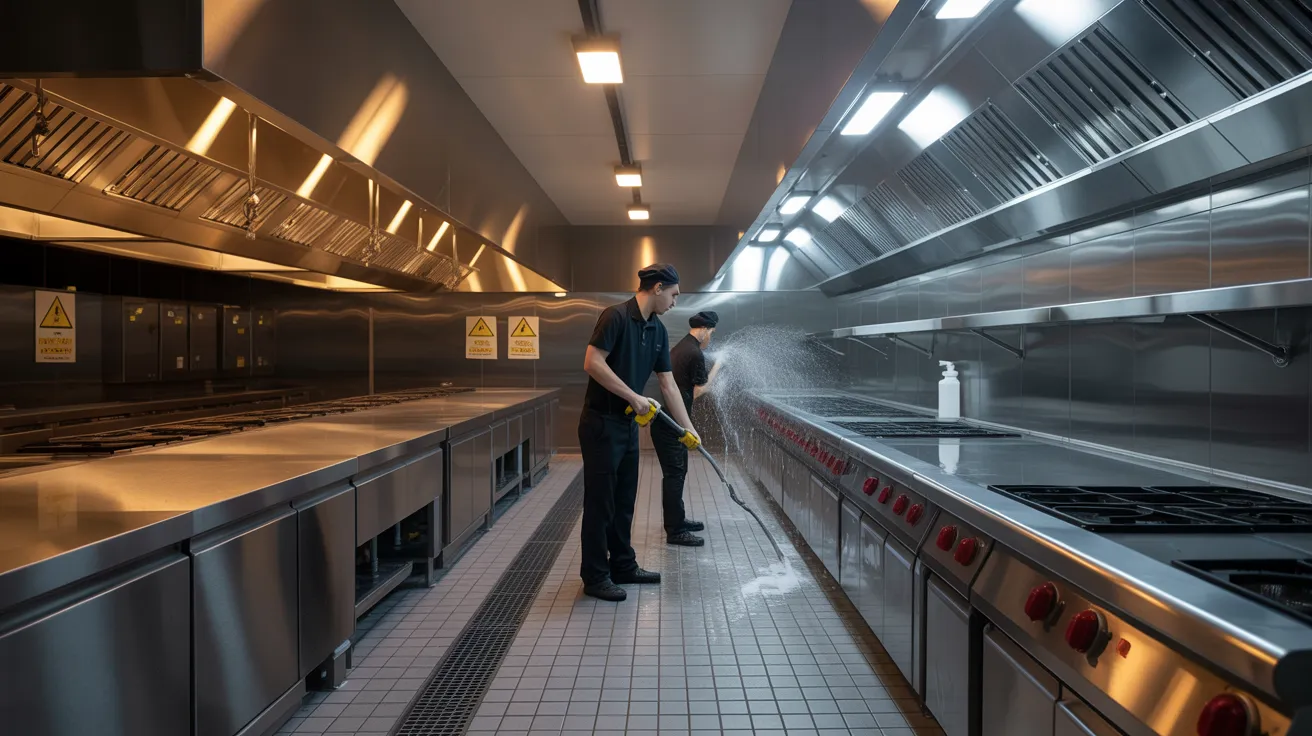
Brampton cleaning professionals will handle kitchens, floors, and restrooms since each space presents different food safety concerns, slip-and-fall, and public health challenges. In industrial kitchens, you need degreasing on cook lines, equipment exteriors, drains, prep surfaces, and splash zones to reduce bacterial growth and pest activity.
Professional floor care with documentation is also included. is likewise provided as part of the service.
Restroom cleaning involves disinfecting touchpoints, fixtures, partitions, dispensers, and waste containers, replenishing amenities and managing odor. They also service restaurant moprooms, where chemical storage, sink hygiene, and drainage conditions can affect sanitation compliance and staff safety daily.
Why Food Safety Cleaning Matters in Brampton
In Brampton, you must maintain sanitary cleaning practices to satisfy health code requirements and achieve compliance. You also reduce bacterial spread through proper cleaning resource of food-preparation surfaces, appliances, and frequently-touched items. Most importantly, you safeguard community wellness by reducing the chance of food poisoning in your establishment.
Food Safety Regulations
Because Brampton food operations operate under strict public health standards, food safety cleaning directly affects your competence to adhere to health code requirements, defend customers, and avoid enforcement action. You must maintain clean food preparation areas, recorded sanitation plans, proper chemical use, and auditable operational standards that meet municipal and provincial inspection expectations.
Strong sanitation supports in managing allergens by limiting residue buildup on common tools and high-touch areas.
Contamination Management
Adhering to regulatory guidelines requires your expertise in stopping cross-contamination throughout routine preparation and sanitation work. You need to separate raw ingredients from ready-to-eat foods, clean prep surfaces between tasks, and keep chemicals away from food-contact items. Structured procedures reduce transfer risks and maintain ongoing regulatory adherence.
Implementing allergen separation helps keep priority allergens from contacting communal work zones, bins, or devices. Deploy dedicated cutting boards, color-coded tools, and strict utensil labeling so staff don't mix items while preparing or distributing. Enforce hand hygiene following raw meat, seafood, eggs, or allergen-containing products. Refresh cleaning cloths often, and validate disinfectant levels using test strips. When your team learns these guidelines per shift, you establish a more hygienic, safer workplace that satisfies Brampton's food safety needs daily.
Community Health Safety
When sanitation efforts deteriorate, you don't only risk a failed inspection—you expand the chance of food contamination striking customers, staff, and the larger Brampton community. You also weaken your role in protecting public health, especially in busy food facilities where contamination can spread quickly through surfaces, equipment, and touchpoints.
You need sanitation procedures that remove soils, disinfect properly, and verify results. That means following contact times, employing authorized sanitizers, recording cleaning times, and training staff to meet health-unit expectations. These controls support pathogen reduction by lowering microbial loads before they contaminate surfaces or food. In Brampton, strong sanitation shields at-risk groups, prevents disease spread, and helps you demonstrate due diligence. When you maintain proper standards, you don't just meet regulations—you substantially decrease danger and support safer food service citywide.
Why Is Cleaning Essential for Food Safety Compliance?
Comprehensive cleaning schedules strengthen food safety compliance by minimizing contamination hazards, controlling pathogen growth, and ensuring your facility complies with sanitation requirements under HACCP-based programs and public health regulations. You verify that food-handling surfaces remain visibly clean and microbiologically controlled, enabling documented preventive controls and inspection readiness.
Comprehensive cleaning additionally solidifies allergen control by extracting residues that can provoke undeclared allergen exposure. When you combine verified sanitation methods with regulatory training, your staff can adhere to standardized methods, employ approved chemicals accurately, fill out documentation correctly, and address deviations prior to they escalate. Consistent cleaning promotes audit trails, validates remedial measures, and exhibits accountability throughout audits. It also helps you preserve product integrity, preserve operational adherence, and decrease the possibility of enforcement actions, product recalls, formal complaints, and avoidable health hazards.
Determining When to Arrange Commercial Cleaning
maintenance activities.
Handling occasional tasks separately ensures more effective planning.
How Do You Choose Brampton Cleaning Experts?
Begin by evaluating providers based on food-safe sanitation requirements—not solely on price alone. You should confirm that each organization comprehends CFIA, public health, and HACCP-based requirements applicable to your facility. Request insurance certificates, WHMIS compliance, staff training documentation, and oversight procedures. Assess whether technicians recognize cross-contamination hazards, chemical handling protocols, and verifiable sanitation records.
Additionally, you need to evaluate operational reliability and accountability. Obtain references from food facilities in Brampton, then review response times, corrective measures, and communication standards. Verify the company conducts supplier reviews and can deliver compliance-ready records when inspectors or external parties need proof. Verify equipment is maintained, color-coded equipment are applied correctly, and location-specific dangers are identified. A qualified provider protects compliance, product quality, and your reputation.
What's included in a sanitation cleaning strategy?
Create a documented strategy that defines every sanitation duty, guideline, and expectation before production starts. You should document cleaning schedules, authorized products, mixing ratios, exposure periods, equipment, and testing procedures for each zone, surface, and piece of equipment. Don't forget to add pre-operational inspections, corrective actions, and employee training requirements.
Your plan should also address cross-contamination controls, waste handling, pest-prevention measures, and documented schedules for restrooms, drains, floors, and food-contact areas. Outline how you'll separate raw and ready-to-eat processes, facilitate ingredient tracking, and maintain accurate allergen labeling through validated cleaning between product changes. You should establish accountability, keep signed records, and assess results against regulatory standards, HACCP controls, and customer requirements. When gaps appear, update procedures immediately and instruct staff.
Commonly Asked Inquiries
Do sanitation providers work during overnight shifts at Brampton properties?
Yes, you can arrange cleaning services to accommodate nighttime operations in Brampton facilities. You'll organize overnight sanitation around production schedules, access requirements, and personnel needs. Providers generally create overnight logistics to minimize disruption, maintain standards, and track completed work. You should verify response times, management, lockout protocols, and disposal procedures before starting service.
Are emergency spill response solutions provided from sanitation professionals?
Yes, you can locate Brampton cleaning professionals providing spill response options. They handle hazardous incidents, assess dangers, isolate contamination, and initiate rapid cleanup to minimize exposure and prevent business disruption. You should confirm timeframes, certifications, PPE measures, and disposal methods. If your facility must adhere to regulations, pick a provider that tracks incidents, adheres to standards, and supports verification.
Will plant-based disinfectants disinfect safely food preparation areas?
Yes, eco-friendly disinfectants can be safe for food-handling equipment if you pick disinfectants approved for food contact and satisfying regulatory requirements. You should check application timing, concentration levels, and rinse requirements before use. Many botanical formulations reduce harsh chemical exposure, but you should gather proof of efficacy against target microorganisms. To preserve residue-free areas, you should follow manufacturer directions precisely and validate the sanitizer satisfies relevant food safety standards.
Can maintenance plans adjust with production fluctuations?
Yes, you can adjust cleaning schedules for seasonal production changes. You should modify intervals, staff levels, sanitizers, and testing procedures to correspond to operational cycles while preserving regulatory adherence. You'll lower production interruptions by scheduling disinfection around changeovers, peak volumes, and equipment use patterns. You should also update standard operating procedures, training, and environmental monitoring to address seasonal hazards, additional allergens, or elevated soil levels. Continuous reviews ensure your strategy efficient.
Will commercial cleaners train employees on sanitation best practices?
Indeed, commercial cleaning providers often offer staff training on sanitation best practices. Your staff obtains instruction on proper chemical use, contact times, preventing cross-contamination, equipment disassembly, and record-keeping. They generally adhere to instruction with HACCP, GMP, and CFIA or local public health requirements. Many also execute sanitation audits to confirm standards, identify gaps, and strengthen improvement measures. This assists you to establish reliable processes, pass inspections, and reduce food safety risks each day.
Closing Remarks
Partnering with Brampton food safety and commercial cleaning experts goes beyond tidying—it ensures your facility meets inspection standards and your standards are defensible. From kitchen areas to production zones, each cleaned area and organized section lessens contamination risk and avoids costly disruptions. By arranging service on appropriate schedules and executing a comprehensive cleaning strategy, you shield staff, your customers, and your image. In a tightly controlled market, clean environments are non-negotiable—they're vital to proper management.